This isn’t a tech tutorial. It’s a reflection on how we moved from hospital clipboards to a digital system that actually helped us care better. If you’re curious about digital transformation but don’t know where to start, this might help you think it through.
In hospital, our newborn needed to have some paperwork filled in for all feeds, and nappy change. Shortly after we were moved from the birthing suites to the maternity ward, I was handed a clipboard. One of my jobs was to log every feed and every nappy change by hand. It worked well in hospital, but once we got home, we needed something that fit better with how we live.
Paper-based systems have a lot going for them:
- The paperwork stays with the patient
- External risk factors contributing to loss are limited
- Zero access time, no waiting for a device or internet
- Lowest common denominator for technology access, anyone can use it
- Security through physical proximity
- Can be approximated with just a blank piece of paper
These factors make paper easy and reliable in the hospital setting. It’s close, visible, simple, and requires no technical skill or infrastructure.
But life outside the hospital is very different. My partner and I always have our phones with us and are connected online. It would be important that we both always know when the baby last fed, when the nappy was changed, and that the information stays in sync between us.
When moving from paper to electronic tracking, a common first step is to simply recreate the paper form in a digital format, for example, a Word document or spreadsheet. This seems straightforward but often creates a “digital copy” without any helpful improvements. It means no input guidance or error checking, and you still have to interpret the data yourself. In many cases, this can make tracking more complicated and prone to mistakes.
A better approach starts by understanding who will use the system, what data matters most, how information should flow, and what decisions need to be supported. Key questions include:
- When was the last feed?
- How much did the baby consume?
- When was the last nappy change?
- When should the next feed happen?
- Have all supplements or medications been given?
A paper system can answer many of these questions but requires effort. For example, calculating times manually, deciphering handwriting, and managing these tasks while sleep deprived. Plus, we had baby brain to contend with.
Before jumping into tools or platforms, I laid out a few basic requirements. These weren’t about features for their own sake, they were about solving real problems we knew we would be facing:
- Shared access: Both my partner and I needed to see and update the same data, from our own devices, in real time.
- Automatic timestamps: No manual entry of date and time, just record the event and let the system handle the rest.
- Feed interval tracking: A timer showing how long it’s been since the last feed or nappy change.
- Supplement tracking: A way to record when medication or supplements were given, and whether anything was missed.
- Daily summaries: A quick view of how today compares to yesterday, volume, frequency, and timing.
- Error prevention: Input validation and guidance to reduce mistakes, especially when sleep-deprived.
- Privacy and control: The system had to be secure, self-hosted, and accessible only to us.
These requirements helped clarify what “better than paper” actually meant. It wasn’t just about digitising, it was about making the process smarter, more reliable, and easier to manage.
While in hospital, I stated to evaluate the requirements above, and how I could achieve these requirements. I looked at four options, each with trade-offs in cost, accessibility, flexibility, and reliability.
Use the same paper version (or a version of it)
- It is not remote accessible.
- Lowest cost.
- Difficult to extend.
- High discoverability.
- No input validations.
- No input context.
Excel that we record the data in.
- It is accessible via mobile phone.
- Very low cost to setup.
- Easy to extend.
- Low discoverability.
- Limited input validations.
- Limited input context.
Form based system (Microsoft Forms)
- Accessible via a mobile phone.
- Very low cost to setup.
- Easyish to extend.
- Not great discoverability.
- Limited input validations.
- Limited input context.
Custom app (dotnet Blazor)
- It is accessible via mobile phone.
- Relatively fast to get minimal setup.
- Ultimate flexibility.
- High discoverability.
- Bespoke input validations.
- Bespoke input context.
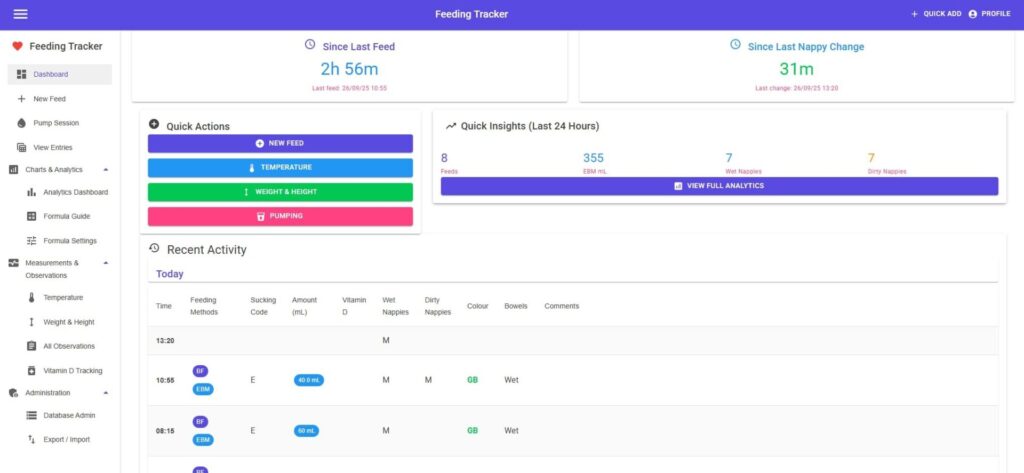
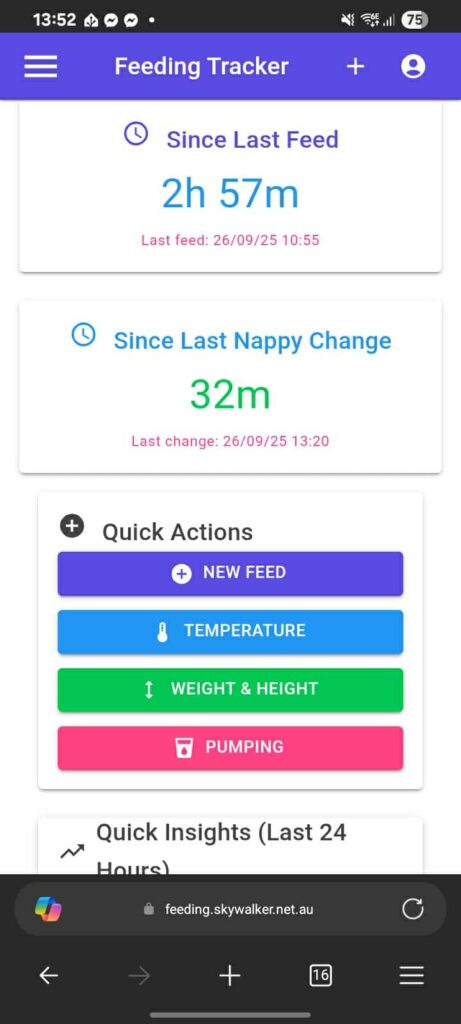
If you’ve been following so far, you might guess which option I chose. Within two days, while still in hospital, I had the basics of a custom app up and running. It recorded all the same information as the paper system, but digital. Entries appeared in a clear table with automatic date and time stamps. I added a timer to show how long since the last entry, which meant we didn’t have to calculate anything manually or rely on memory. Especially during sleep-deprived nights, that made a real difference.
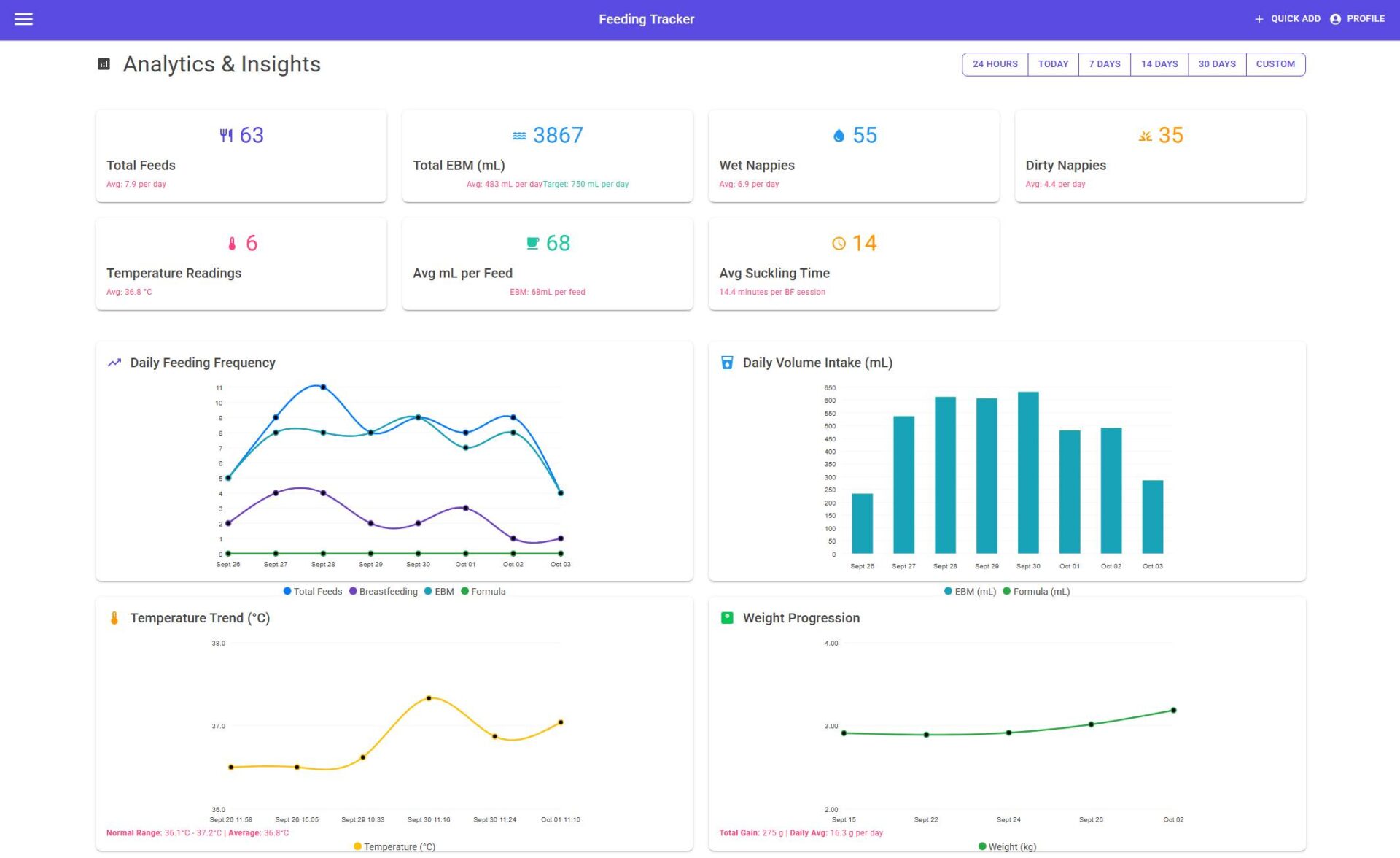
The other feature that made this really useful was the analytics page. It gave us a quick snapshot of how today compared to yesterday, feeding frequency, volume trends, and whether we were staying consistent. It turned raw data into something actionable.
From a privacy and security perspective, the platform is self-hosted on my own home lab servers and secured using Entra Authentication. Only my partner and I can access it. That means no third-party storage, no external dependencies, and full control over our data.
This approach made tracking easier, clearer, and more reliable. Digital transformation isn’t about adopting technology for its own sake. It’s about making everyday tasks simpler and smarter. For new parents, it means turning paper logs into tools that actually help you care better.
If you’re considering digital tools for your own routines, start by focusing on what you want to achieve rather than the technology. Sometimes a small change that fits how you live can make a big difference.
And if you’re already using digital tools but still feel like you’re just copying paper into a screen, it might be time to rethink the flow. The goal isn’t just to digitise, it’s to improve. That’s where transformation really begins.
Reach out to discuss further skywalkerconsult.com.au