
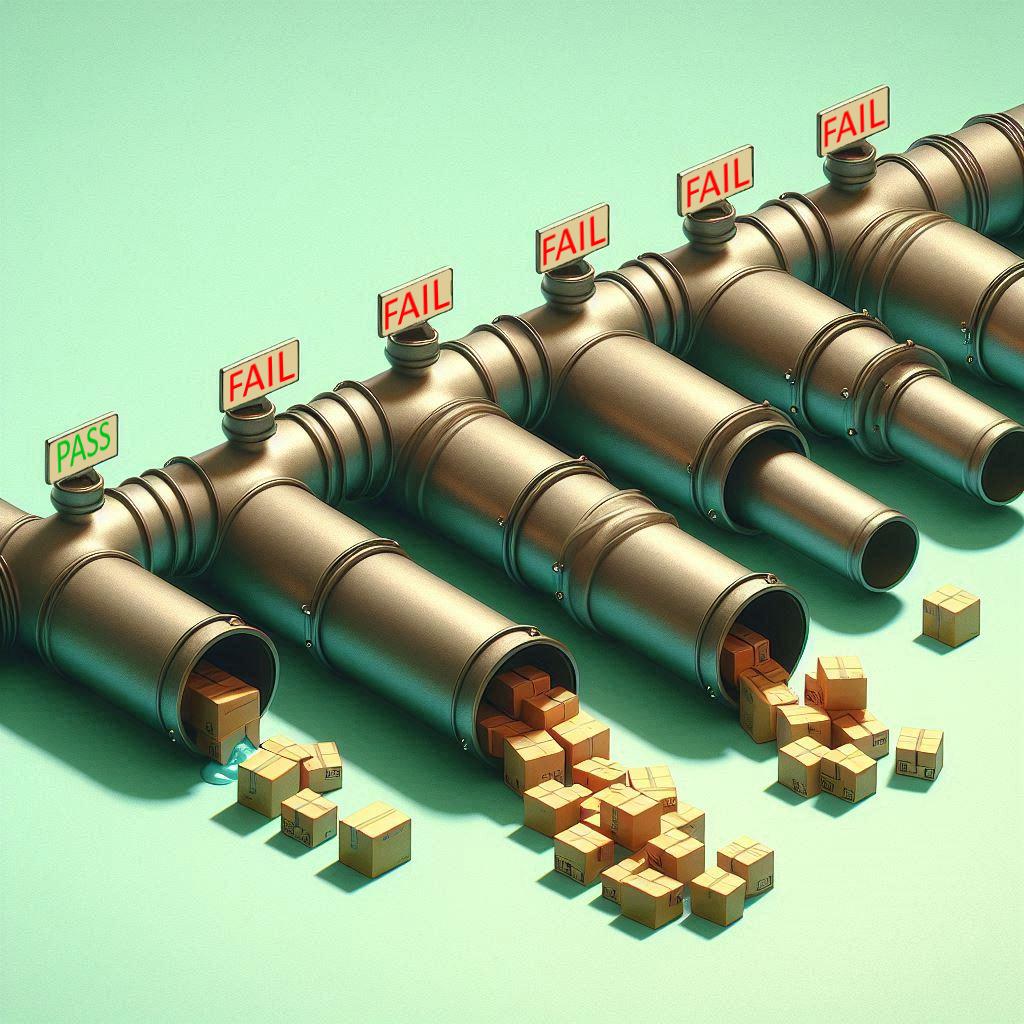
To many developers, the concept of a CI/CD pipeline is clear and well understood. However, for many other stakeholders (and the sceptical developers), it remains unclear what a CI/CD pipeline is, and why it should be included in their non-functional requirements of bespoke software they want developed.
What is CI/CD?
CI (Continuous Integration) is an automated process that takes the software source code and performs various tasks with it automatically. These tasks can range from simple actions like building (compiling) the code for deployment or use; to more complex processes such as running tests, integrating with other tools, combining with other software, and providing rich insights before building. At the conclusion of a successful CI run, the software is ready for use.
CD (Continuous Delivery or Deployment) refers to the process of automatically deploying the software. This can be part of the CI pipeline or a standalone pipeline, depending on your environmental requirements. It can be as simple as copying the artifact (built software) to a server automatically, or as complex as modifying configuration files, spinning up new VMs/containers, and removing previous versions from deployment.
Why Include CI/CD in Non-Functional Requirements?
Including CI/CD in your non-functional requirements offers several benefits:
- Demonstratable metrics for other stakeholders: The vast majority of CI systems allow for running of additional tools, and tests that produce reports. This includes security tools to determine if dependencies have known vulnerabilities. Test results against well-defined tests that test the parts that are important to the business.
- Decrease the time to iteration: Faster feedback loops allow for quicker adjustments and improvements. This generally translates to the software development team can demonstrate the software more often, and in a configuration that is closer aligned to the production systems.
- Improve the quality of the software: Automated testing and integration help catch issues early. This includes functional tests ensuring that changes do not cause regressions, as well as scanning for known security issues, and offer remediations.
- Improve the repeatability of the software build: Consistent and reliable builds reduce the risk of errors. It can reduce the “it works on my machine”, and new developers can get up to speed faster.
- Allow for testing to be done automatically: Automated testing ensures thorough and consistent validation of the software. This includes testing to your specifications of the software, security, and integration to external services.
- Long term maintenance is simplified: Modern software is never done, there is always something to add, update, modify, remove. Having a CI in place ensures that the software can be reliably built without any magical, or local knowledge required.
- The software is documented: This allows the processes to develop be documented fully, and when the documentation breaks, so does the software. A common phrase to emphasis this is “the Word document won’t break the build, but the CI will”.
Non-Technical Benefits of CI/CD
In addition to the technical advantages, CI/CD pipelines offer several non-technical benefits that can be highly valuable to stakeholders:
- Enhanced Collaboration: CI/CD fosters better communication and collaboration among team members by providing a shared platform for development, testing, and deployment. This leads to a more cohesive and efficient team.
- Increased Transparency: With CI/CD, stakeholders have greater visibility into the development process. They can track progress, see real-time updates, and understand the status of the project at any given time.
- Reduced Risk: By automating testing and deployment, CI/CD reduces the risk of human error and ensures that issues are identified and addressed early in the development cycle. This leads to more stable and reliable software.
- Cost Savings: CI/CD can lead to significant cost savings by reducing the time and effort required for manual testing and deployment. It also minimizes the likelihood of costly errors and rework.
- Faster Time to Market: With CI/CD, new features and updates can be delivered more quickly and efficiently, allowing businesses to respond to market demands and stay competitive.
- Improved Customer Satisfaction: By delivering high-quality software more quickly and reliably, CI/CD helps ensure that customers receive a better product and have a more positive experience.
- Software will build and run: A CI and CD will ensure that the software will work (when you have appropriate tests, and gates) before it gets in front of users.
By incorporating CI/CD pipelines, you can enhance the efficiency, quality, and reliability of your software development process, ultimately leading to better outcomes for your projects and greater satisfaction for all stakeholders involved.